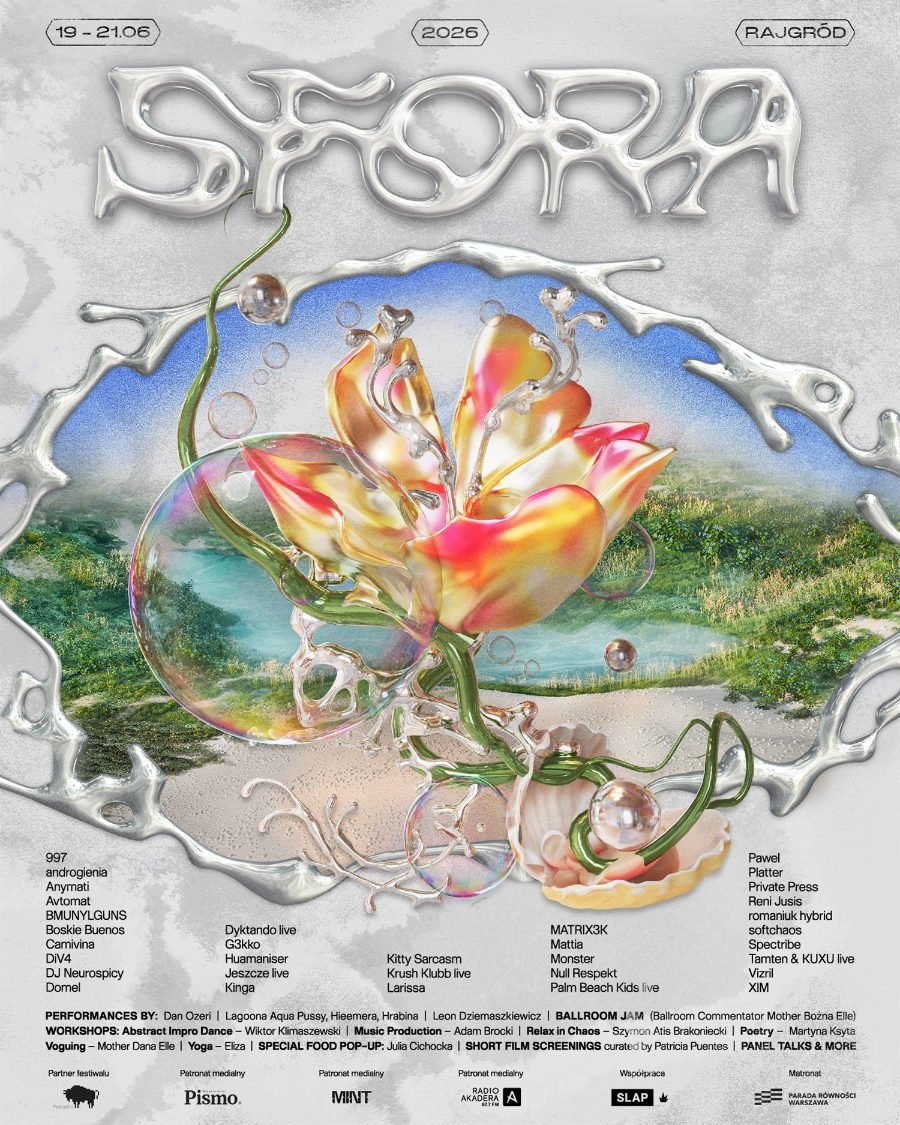
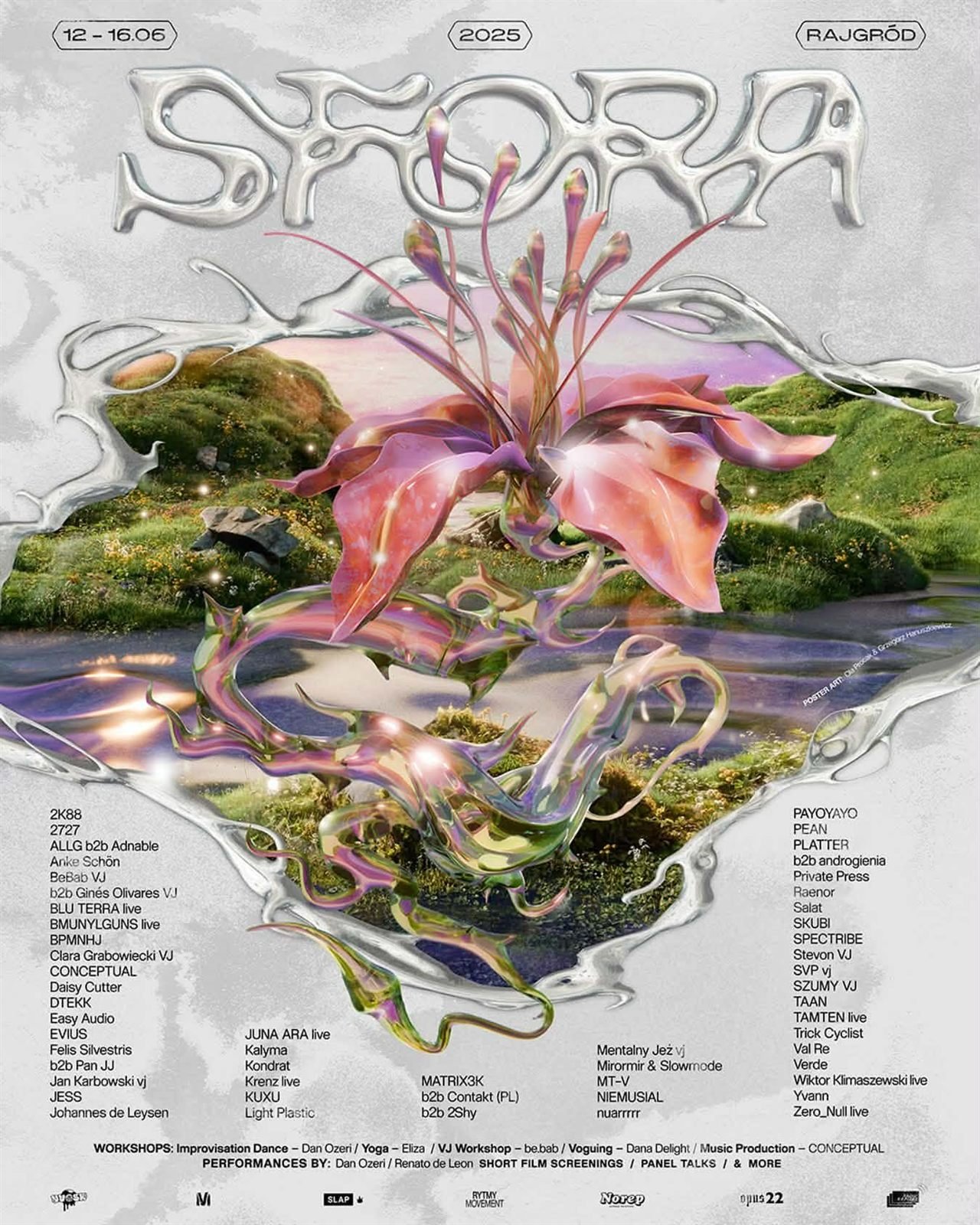
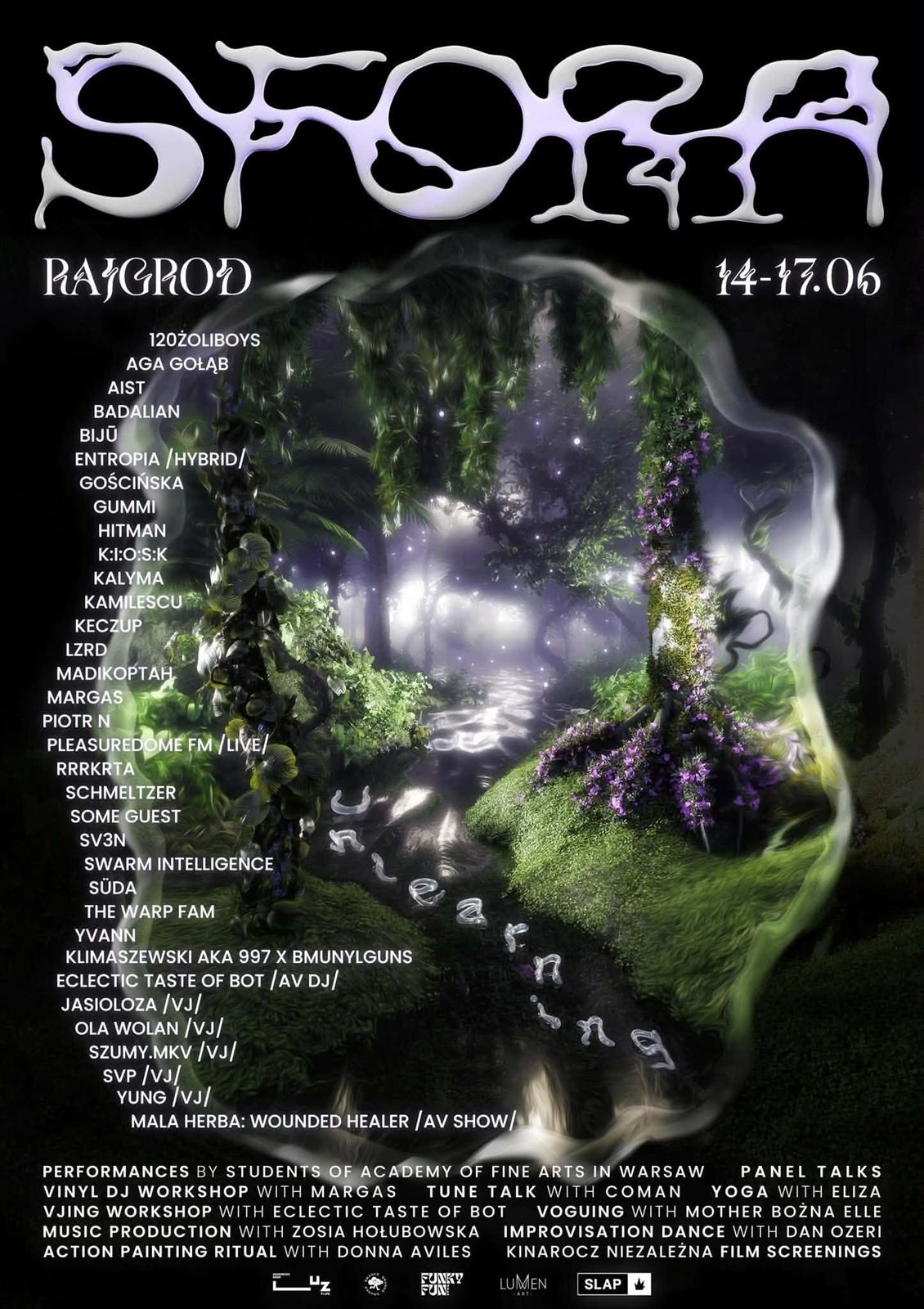
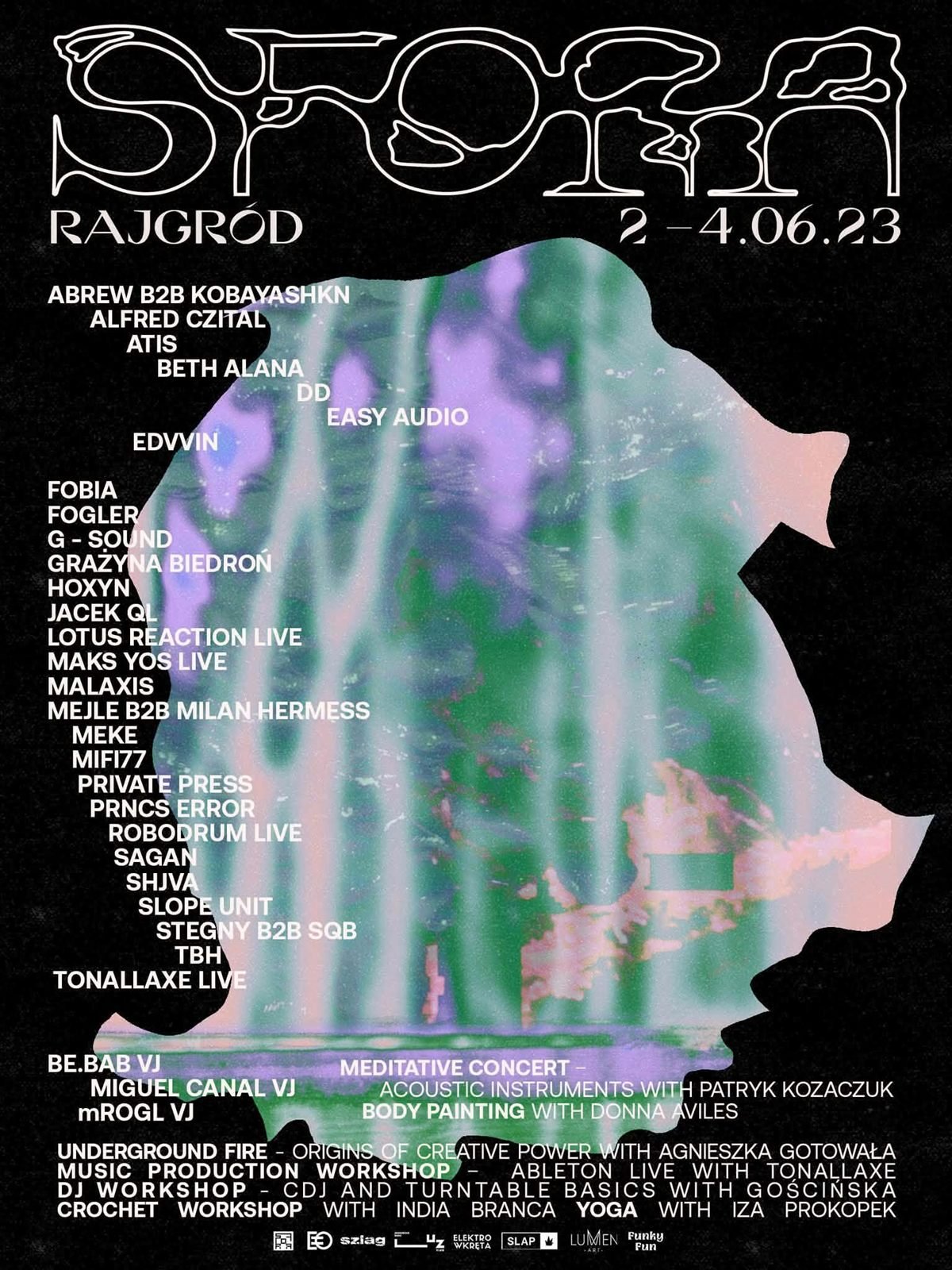
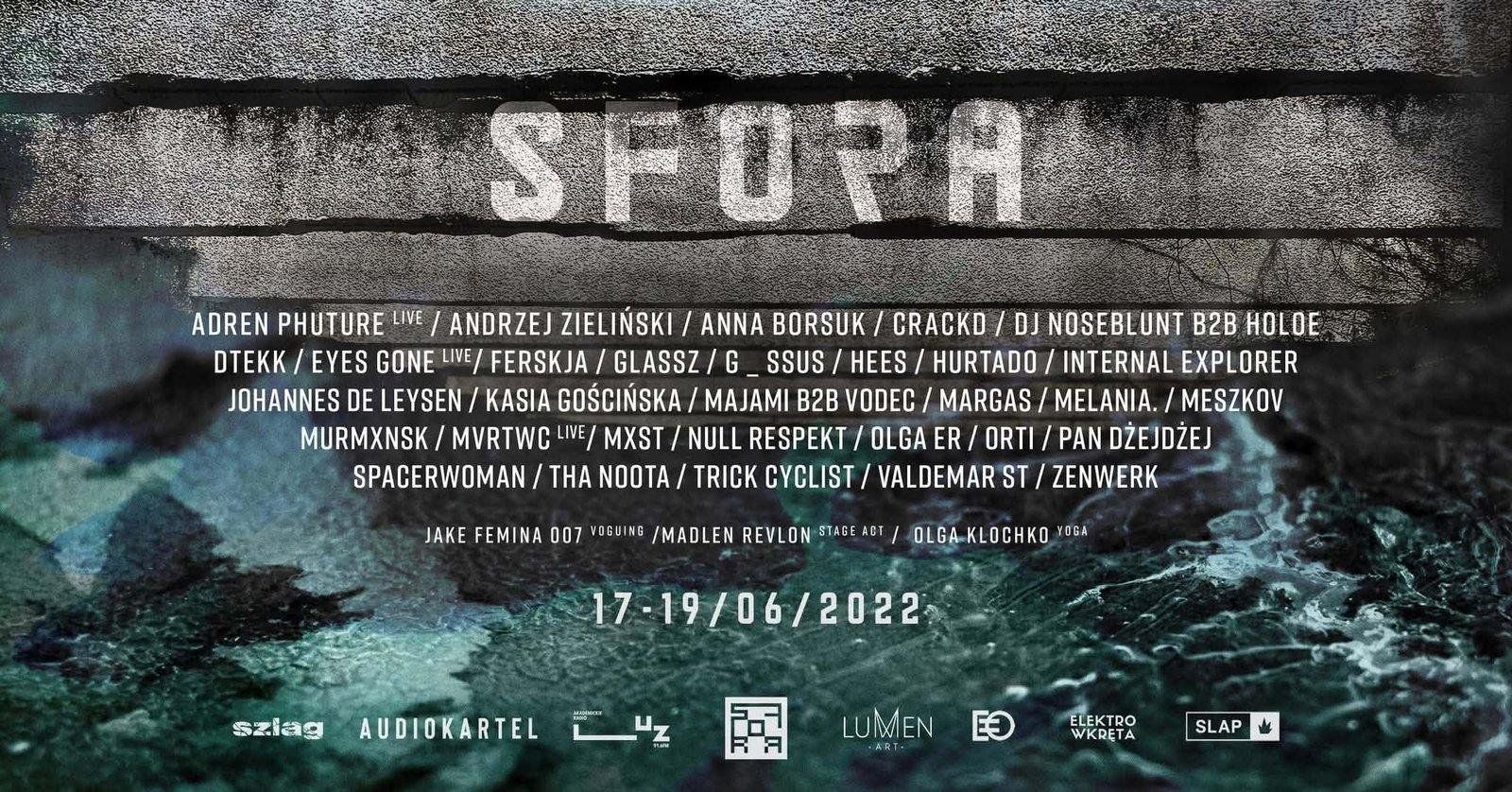
Sfora
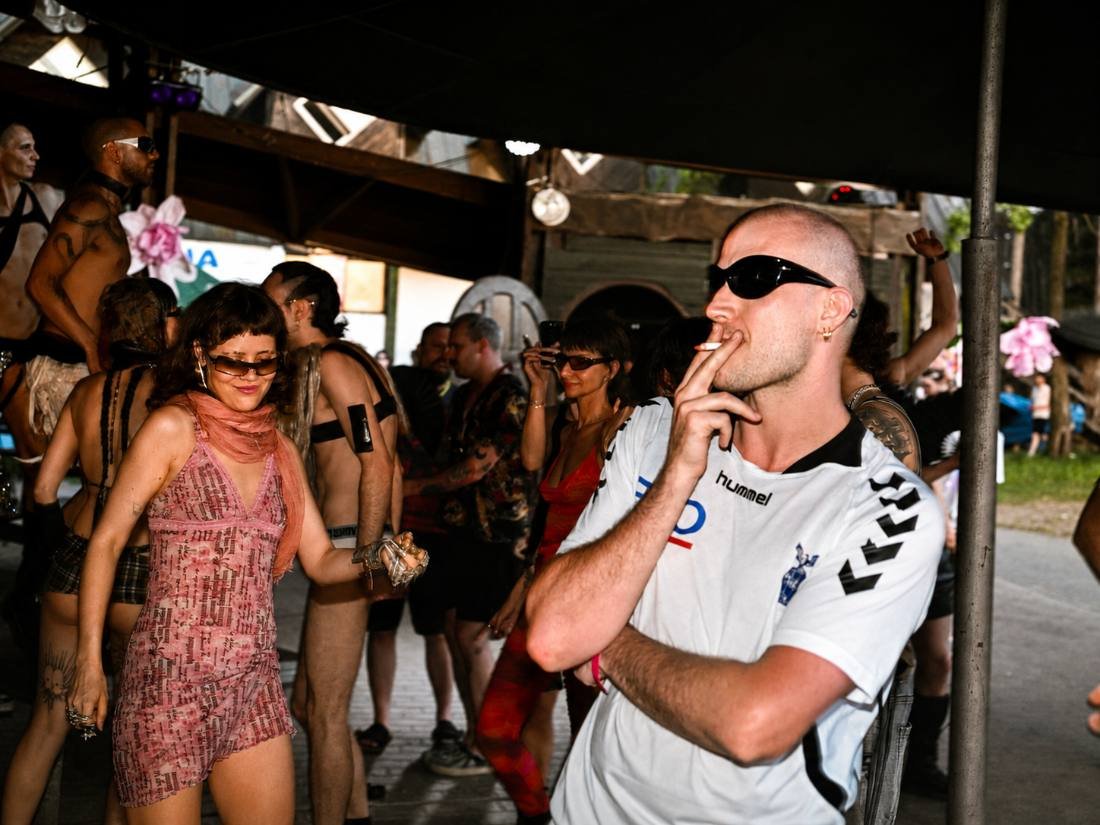
In Polish, sfora means a pack: a group that moves together, protects itself and looks after each of its members. It’s not a metaphor picked for a logo — it’s how the festival actually works, and the idea is expressed through care rather than exclusion. Its intimate scale means the same faces return across stages, workshops and shared spaces. Performers remain part of the audience after leaving the stage, and the boundaries between artists, organisers and participants feel less rigid than at larger events.
Reworking a collective past
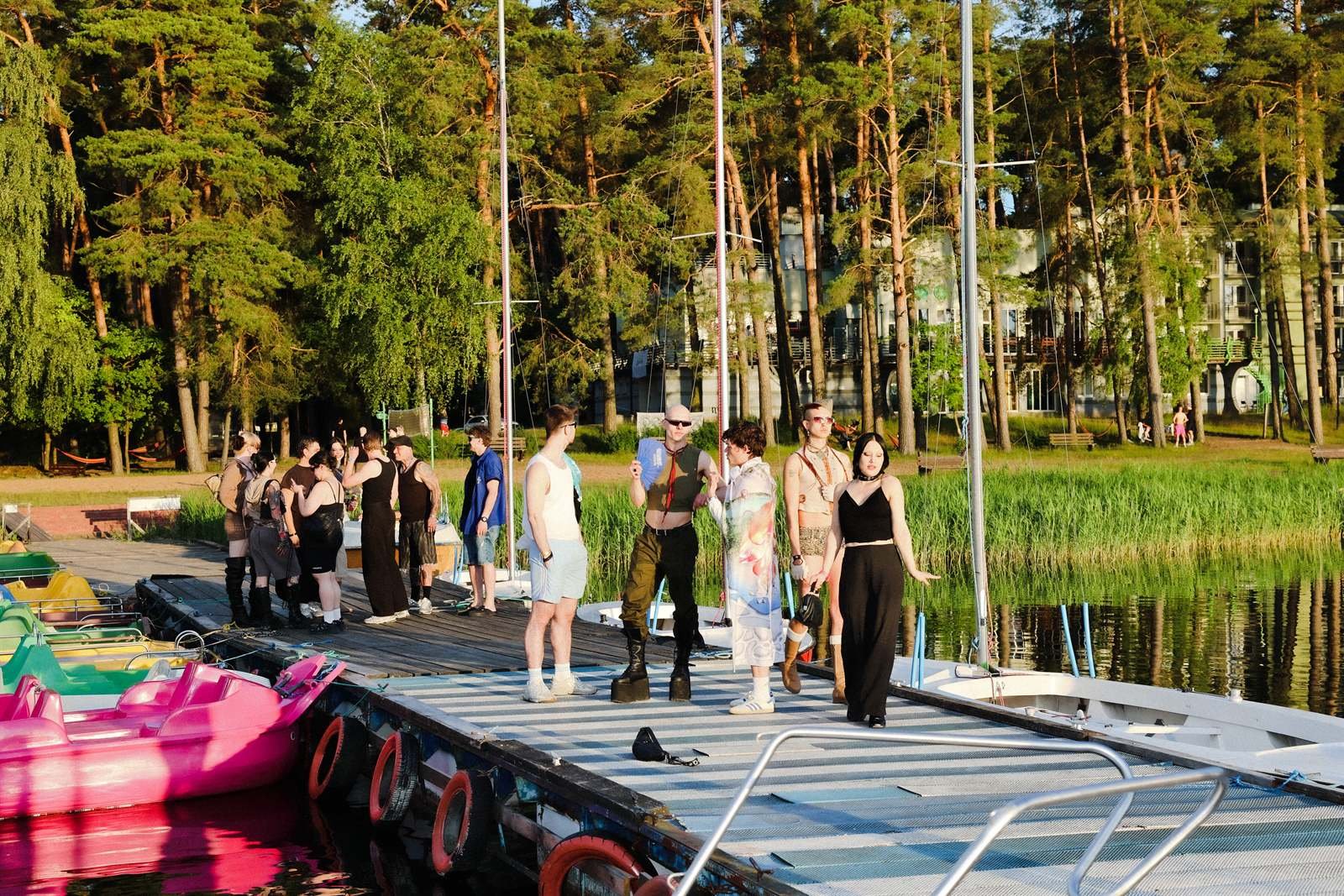
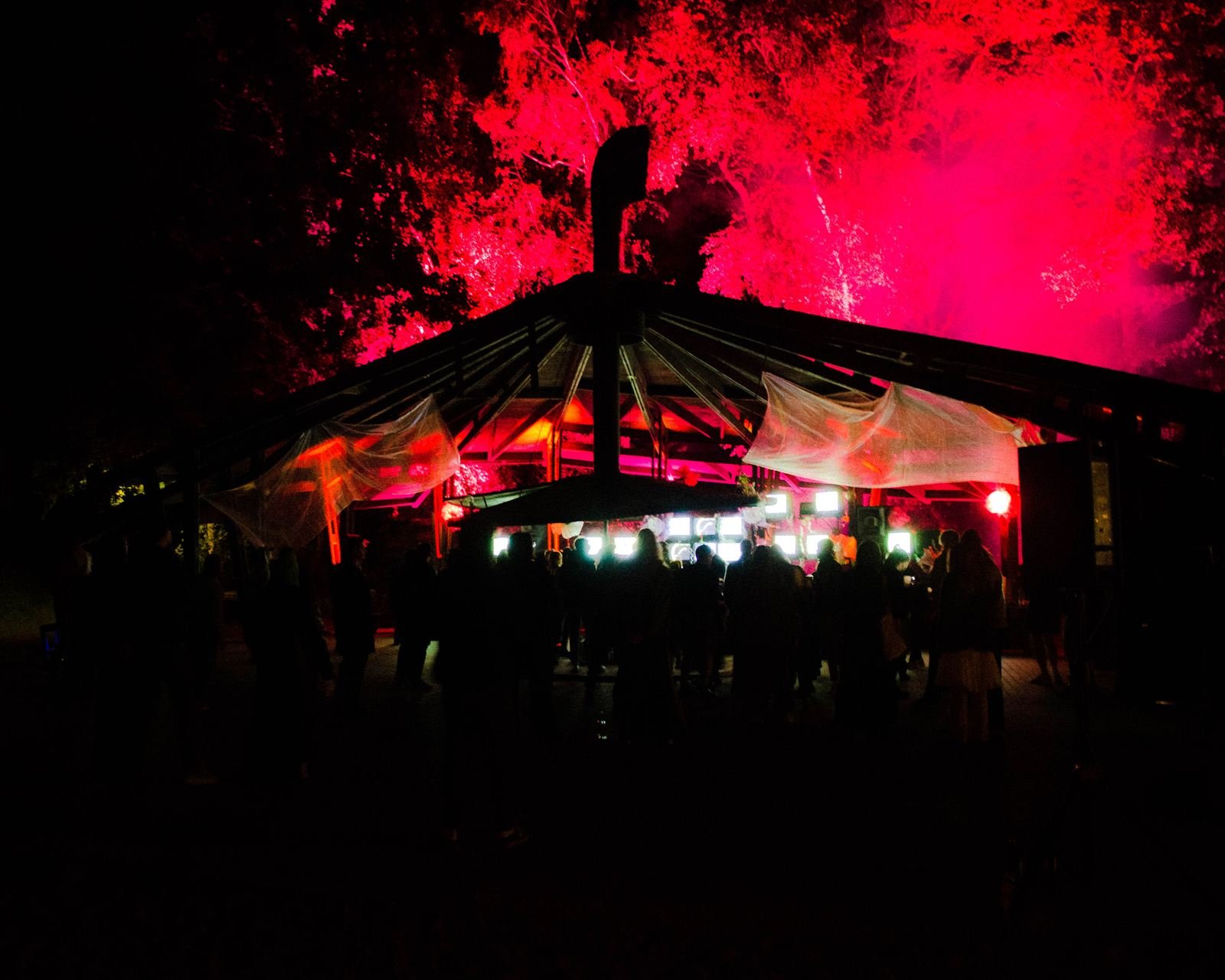
SFORA takes place at Knieja and Energetyk, two lakeside holiday resorts in Rajgród. Their history reaches back to the socialist period of the Polish People’s Republic, when resorts connected to state-owned workplaces provided organised summer holidays for workers and their families. Their wooden cabins and shared recreational spaces still carry the memory of an earlier vision of collective leisure. We didn’t erase that history — we moved into it. Cabins become galleries, wooden structures become stages, and a place associated with one political idea of community is inhabited through queer music, performance and culture. The original purpose of the site — bringing people together — remains visible, but the people defining that experience have changed.
Beyond the big city
Poland’s queer scene has developed for years through clubs, collectives, artists, parties and informal networks, often without substantial institutional support. Within that context, openly building a queer festival outside one of the country’s largest cities — in Podlasie, often perceived as one of Poland’s more conservative regions — remains significant. People can be openly queer without queerness becoming the only subject of the weekend; instead, it creates the conditions for music, friendship, experimentation, pleasure and rest.
What comes next
We want to bring SFORA to the attention of a wider international music community while preserving the intimacy and strong sense of connection that define it. The aim is not to become a large commercial festival, but to let more people outside Poland discover its artists, ideas and atmosphere without losing the closeness that makes it distinctive. A gender-balanced line-up and an awareness team on duty for the whole festival are how we keep our promise of tolerance and acceptance.
For a few days beside Lake Rajgrodzkie, this community already exists. We just open the gate.
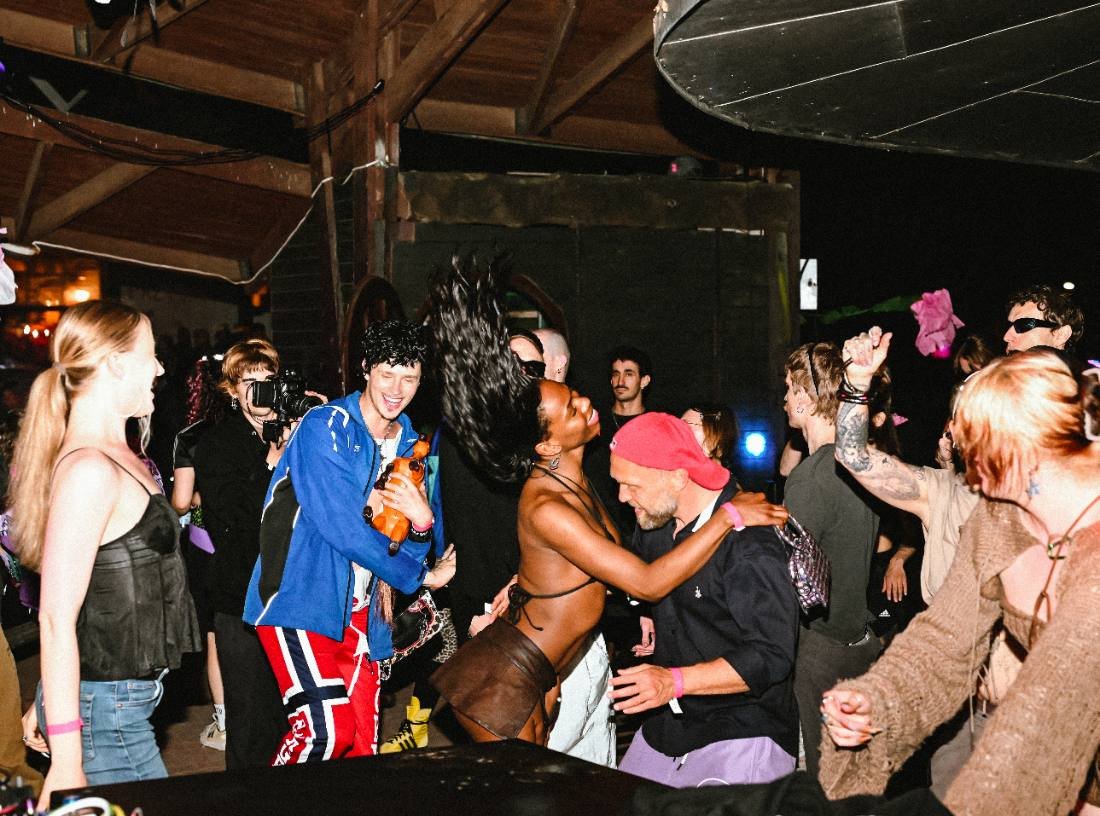
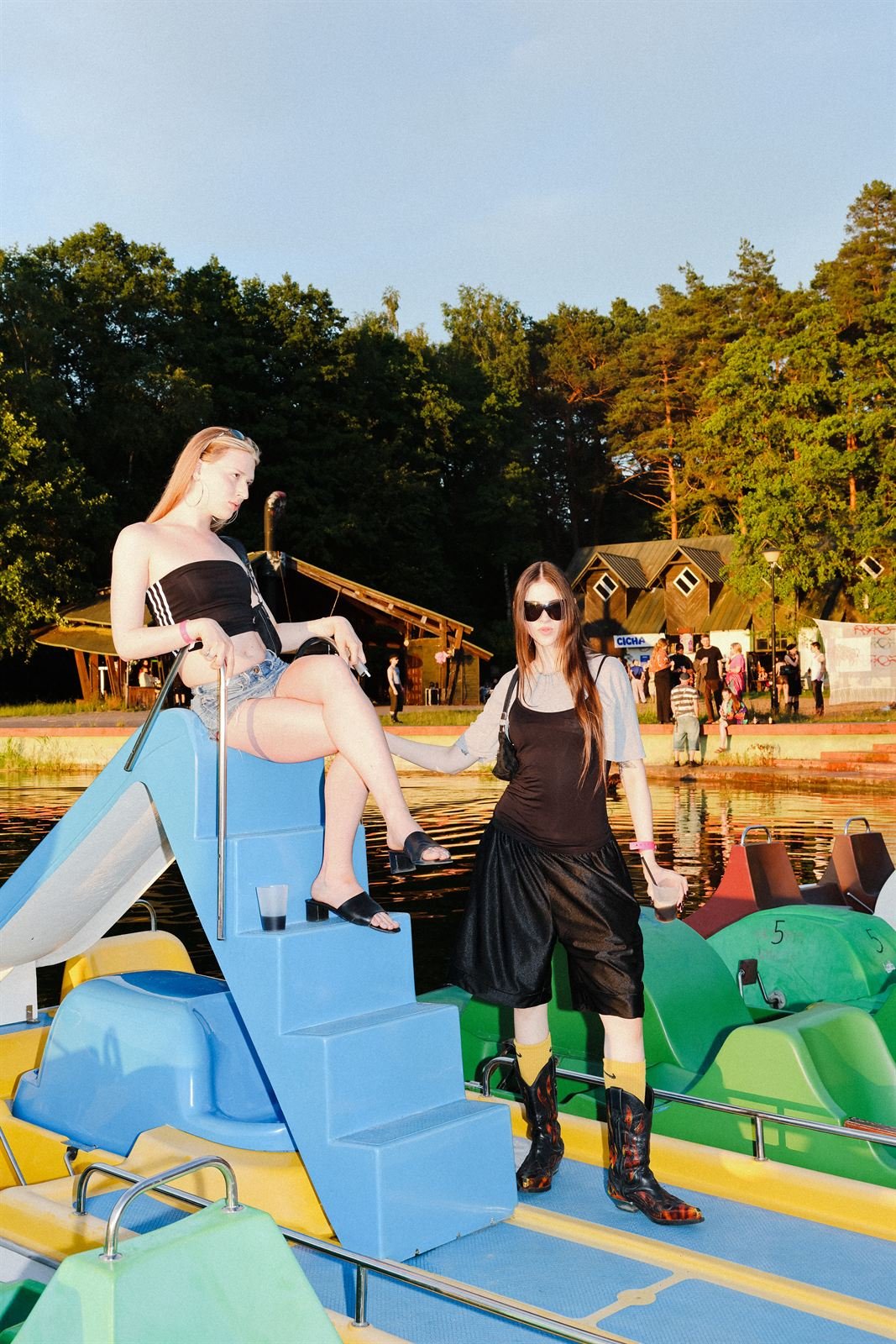
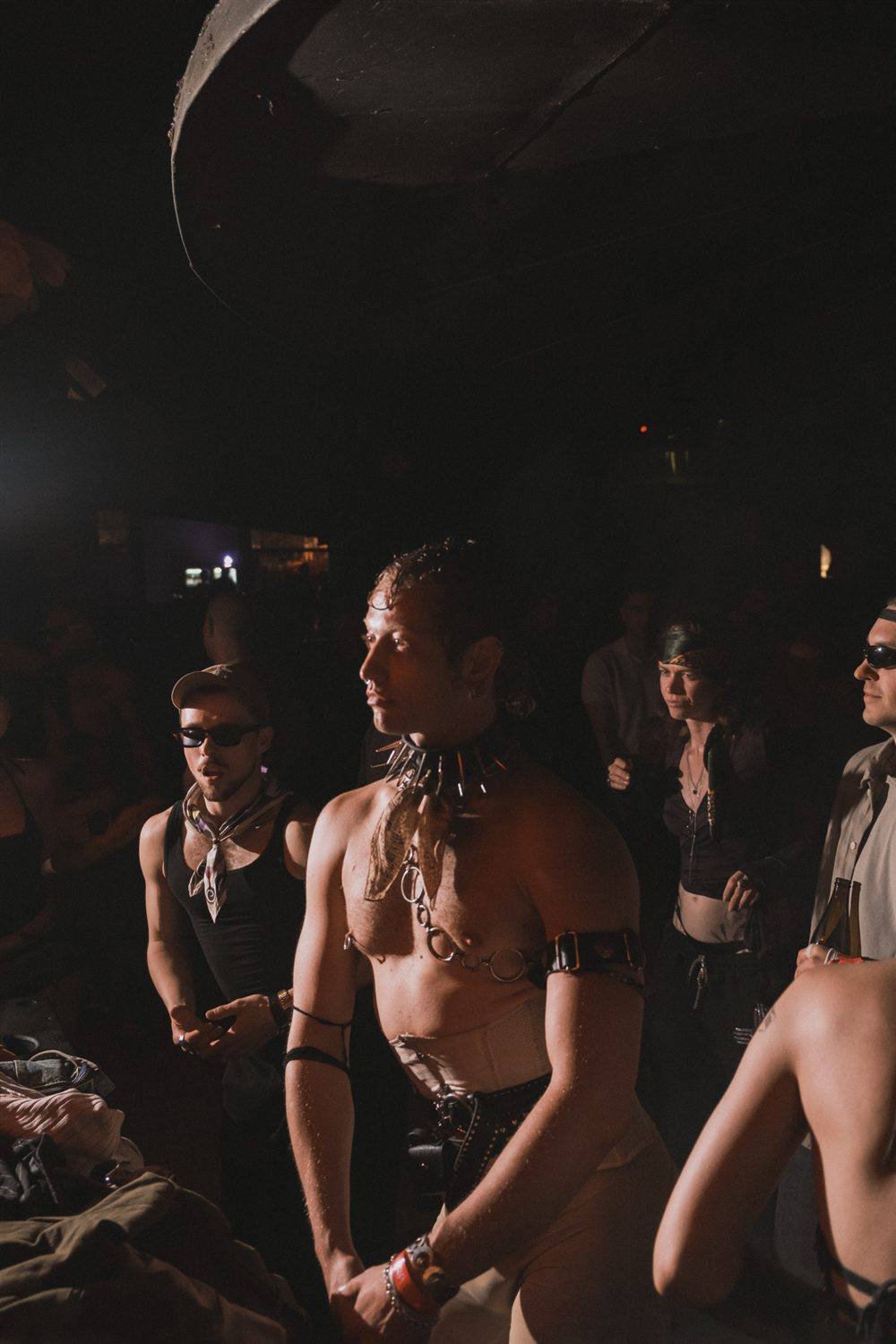
Editions 2022–2026